

Purchasing a Mobile Home? Here’s What You Need To Know About Insuring It
July 27, 2026
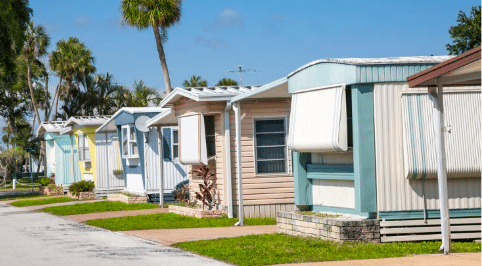
Insuring a mobile home is different than insuring a traditional one. To get a quote, you’ll be asked several questions about your mobile home. The age of the home is one such question and an important consideration.
Mobile home construction is regulated by provincial building codes and by the Canadian Safety Standards Act. In many instances, mobile homes are called “manufactured homes.”
Overall, coverage for manufactured homes is similar to homeowners coverage, yet there are several options you won’t find on a traditional policy.
What does a manufactured home insurance policy cover?
Owners of mobile homes are covered for damages to the home itself and any other permanent structures on their property, such as a garage, pool or shed. If you rent a mobile home, your policy won’t include these coverages.
Both owners and renters are covered for damage to their personal property, including appliances, furniture, clothing and computers. Some categories of items have coverage limits that can be extended by purchasing riders. Goods can be repaired or replaced using either actual cash value (ACV) or replacement cost value (RCV). ACV is the value of the items, minus depreciation. RCV is what it would cost to replace the items with new ones. RCV may also be available for the home itself if it’s a recent construction.
Manufactured home insurance provides liability coverage in case a guest is injured or their property is damaged while at your home. Finally, loss of use coverage provides additional living expenses to pay for a hotel and food if you have to vacate your home while repairs are underway.
When do you need manufactured home insurance?
Are you required to have manufactured home insurance? You will likely need coverage if you have a mortgage or live in a mobile home community. Even if you’re not required to carry a policy, it’s better to have insurance than to risk the financial burden should the unexpected happen.
If you own a modular home, you’ll most likely need manufactured home insurance rather than homeowners insurance. While they are both prefabricated, they are very different in nature. Manufactured homes are shipped out in one piece with no assembly required, and the frame and foundation are usually made of metal. Modular homes, on the other hand, are shipped in several pieces and assembled on top of a permanent cement foundation.
Once assembled, a modular home looks like a traditional house. If you are still unsure, look for a Canadian Standards Association certification label, a small decal located on the outside of your home that indicates it is a manufactured home.
What you will need to disclose to get Insurance
Insurance companies tend to be more cautious when insuring mobile homes. Given the lack of a permanent foundation, wind damage can be severe, especially if the home doesn’t have a permanent ground anchor or tie-down. Fires also tend to spread faster and cause more extensive damage in mobile homes.
You will be asked a number of questions about the construction of your home, as well as the property it sits on. Don’t be nervous. Most of the information should be easy to find with a little preparation.
Here is a partial list of the information you will need to prepare and provide to get a quote:
- Do you own or rent the property?
- Do you live there full time? If not, how often?
- Is the property seasonal or vacant?
- When was the home built? When did you purchase the home and for what amount?
- Is the home in a permanent location? Do you plan to move it?
- Do you own or lease the land the home is located on?
- What is the make, model and serial number? If the home is leased, this may be optional.
- What are the dimensions of your house?
- What materials are used for the skirting?
- Is the interior made of plaster and Sheetrock, or prefabricated walls?
- Did you add anything to the home, like a porch or an extra room?
- Do you have any detached structures, such as a shed or a garage?
- Is your home permanently anchored with a tie-down or ground anchor?
Finding the right policy for your needs
Because mobile home construction is now certified in every province, finding insurance for older noncertified mobile homes may be challenging. No matter your situation, count on us to find the right provider and the coverage you need.
This content is for informational purposes only and not for the purpose of providing, financial, medical or legal advice. You should contact your attorney, doctor, broker or advisor to obtain advice with respect to any particular issue or problem.
Copyright © 2026 Applied Systems Inc. All rights reserved.